
Last updated November 15, 2026
 Sweep & inspection
 Caps & crowns
 Flue relining
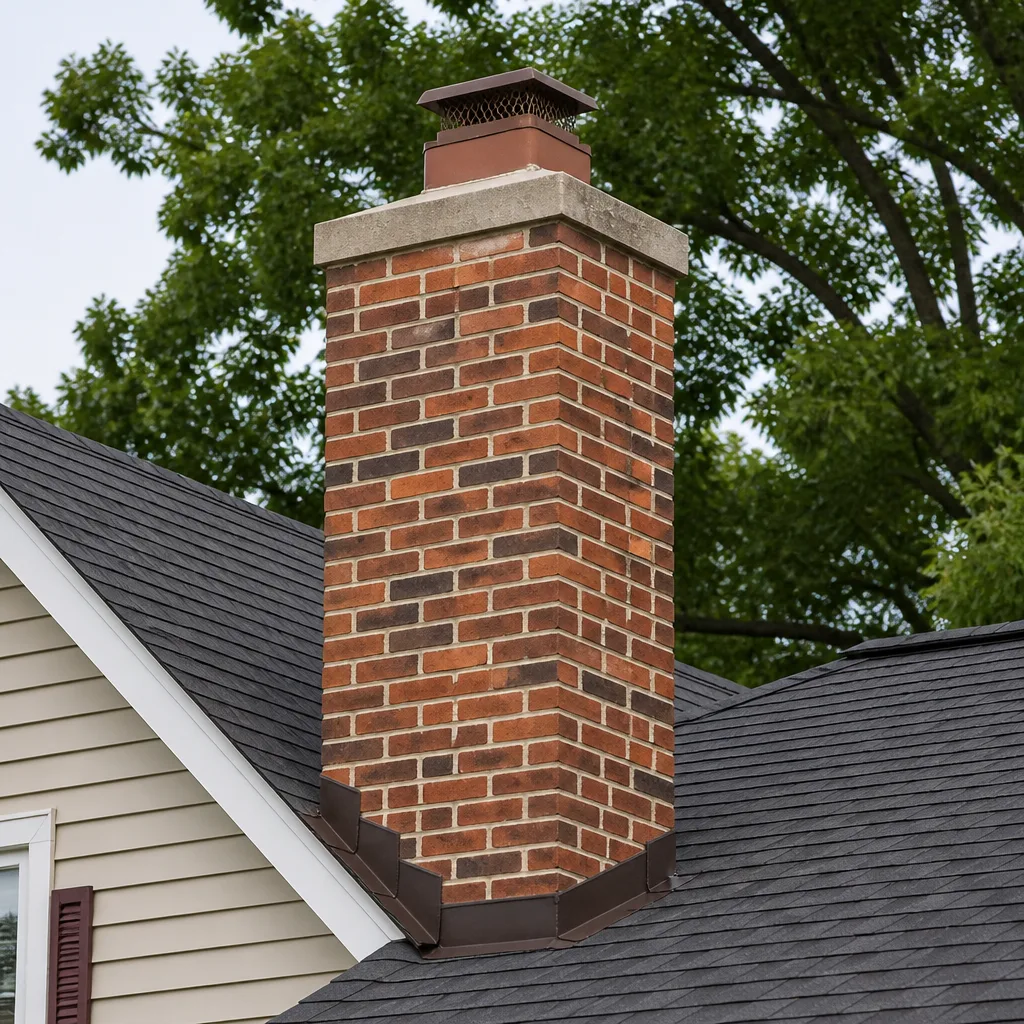 Masonry repair
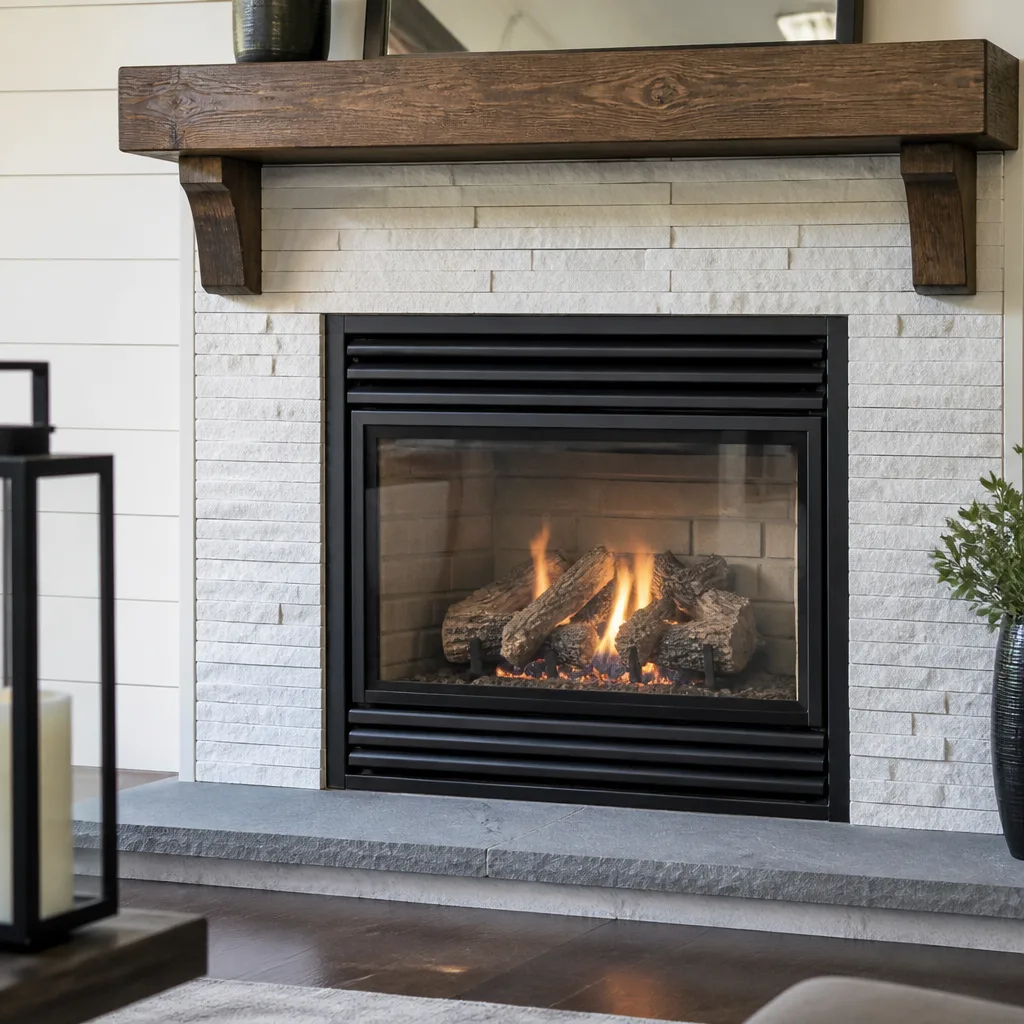 Gas fireplace service
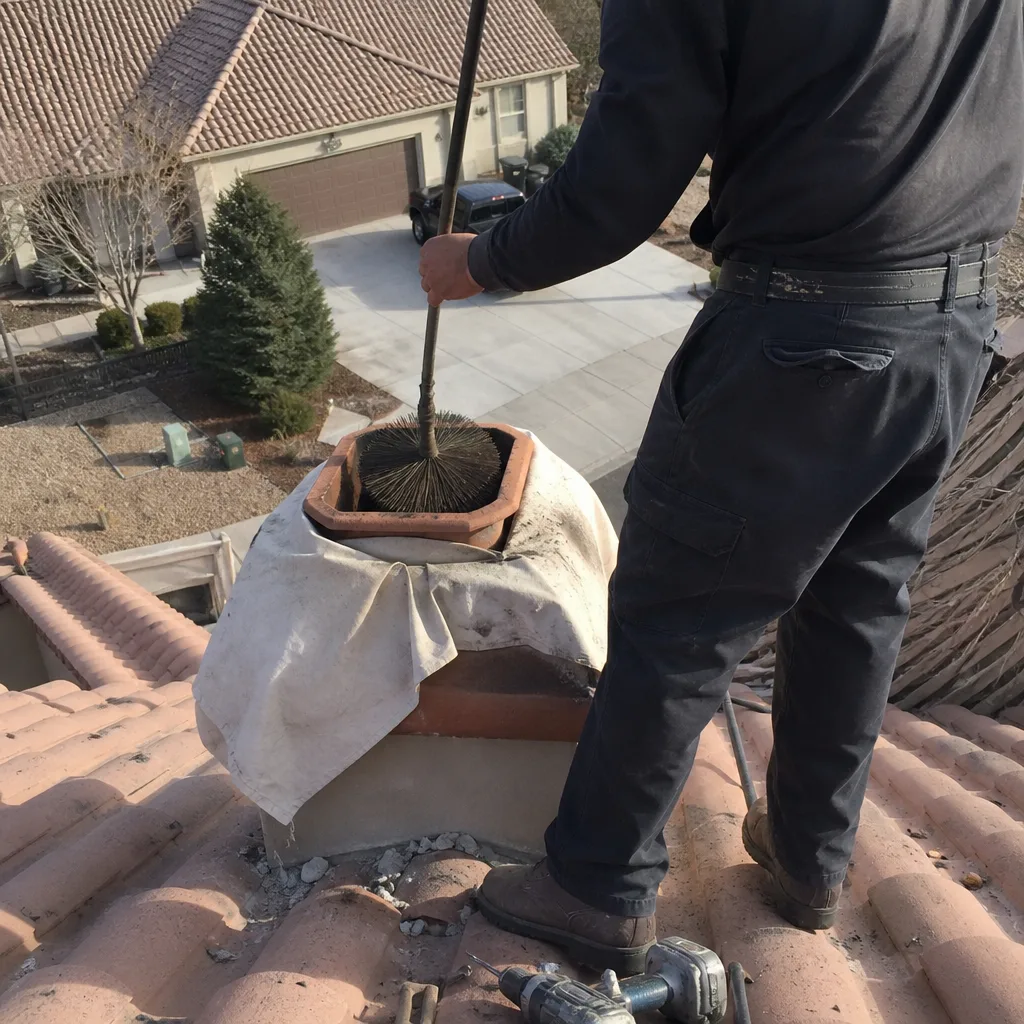
Level 1 sweep and inspection to the NFPA 211 annual standard - flue, crown, cap, and flashing checked and photographed
Chimney sweep logs do not sweep chimneys. They loosen some creosote - which then falls where a brush and vacuum still have to collect it.
Chimney Cleaning Warning Signs: A Paradise Homeowner’s Reference Guide
A smoky smell on a hot August afternoon with no fire burning isn’t just unpleasant. It’s your chimney telling you something specific about your liner or damper seal. Most homeowners wait for the dramatic signs: flames where flames don’t belong, a stain spreading across the ceiling, a smell so strong the living room is unusable. By then a cleaning visit has usually become a repair job. The early signals are quieter, and they’re specific. Creosote has a smell. Animal intrusion has a different one. Moisture decay has a third. This guide walks through what each sign actually means, which exterior marks a Paradise homeowner can spot from the ground, and how to tell a cosmetic issue from a structural warning so you can explain the urgency accurately when you call.
Quick Answer
The warning signs that most reliably mean a chimney needs professional attention are: a strong odor with no fire burning, dark staining or white mineral bloom on the exterior brick, spalling or flaking masonry, a fireplace that suddenly smokes into the room, and scratching or scraping sounds inside the flue. Any one of these is a reason to book a chimney sweep rather than wait for the next burn season.
Styles & brands we work with
- Sweep & inspection
- Caps & crowns
- Flue relining
- Masonry repair
- Gas fireplace service
Table of Contents
- What Your Chimney’s Smell Is Telling You
- Exterior Warning Signs You Can Check From the Ground
- Draft Problems as a Diagnostic Tool
- Sounds That Signal Nesting or Structural Movement
- Cosmetic vs. Structural: How to Tell the Difference
- Why Paradise Chimneys Age Differently
- How a Professional Checks a Chimney in Paradise
- How to Communicate Urgency When You Call
What Your Chimney’s Smell Is Telling You
Odor is the most misread chimney signal in Paradise, and the most useful. The mistake homeowners make is treating every smell the same. They aren’t. Each odor pattern points to a different mechanism, and diagnosing which one you have is the first step toward the right fix. Here’s how to sort them.
- Creosote smell. A sharp, tarry, almost bitter odor that gets stronger on warm, humid days. This is built-up creosote off-gassing when the chimney is warm and idle. Creosote is the flammable residue that causes chimney fires, so a strong creosote smell during the off-season is a direct call for a sweep.
- Animal intrusion odor. Musky, ammonia-like, or faintly like a barn. Birds, squirrels, and other animals find an uncapped flue an easy cavity to nest in. The smell is usually worse near the firebox, and you may hear the animals before you smell them.
- Moisture and decay odor. Damp, musty, earthy. This points to water getting into the flue or masonry and creating decay. It’s the most serious of the three because it usually means the chimney’s protective structure is compromised.
- Smoke smell with no fire. A backdraft or a failed damper seal pushing flue gases into the room. This is the one that most deserves a same-day call because it can mean combustion byproducts are entering living space.
If you can’t tell which of these you have, describe the smell to us when you call. In our experience, a homeowner’s description of the odor is often enough to tell a technician what to expect before arrival. In Paradise’s dry climate, moisture smells are less common than creosote, but they’re far more consequential when they show up.
Exterior Warning Signs You Can Check From the Ground
You don’t need to get on the roof to catch most chimney problems. A walk around the outside of the house, looking at the chimney from a safe distance, reveals a surprising amount. These are the exterior signs worth knowing in Paradise, and what each one means.
- Dark staining. Black or brown streaks running down the chimney’s exterior usually mean creosote or smoke escaping the flue, often through a cracked flue tile or a gap at the crown. Staining concentrated near the top suggests a flue or crown issue; staining lower down can indicate moisture tracking through masonry.
- White mineral bloom (efflorescence). A powdery white deposit on the brick surface. It’s salt pushed out as moisture moves through the masonry and evaporates. Efflorescence itself is cosmetic, but its presence tells you water is migrating through the brick, which eventually causes spalling.
- Spalling brick. Face pieces flaking, peeling, or falling off. This is structural. Once brick spalls, the masonry is holding less load than it was designed for, and it won’t fix itself.
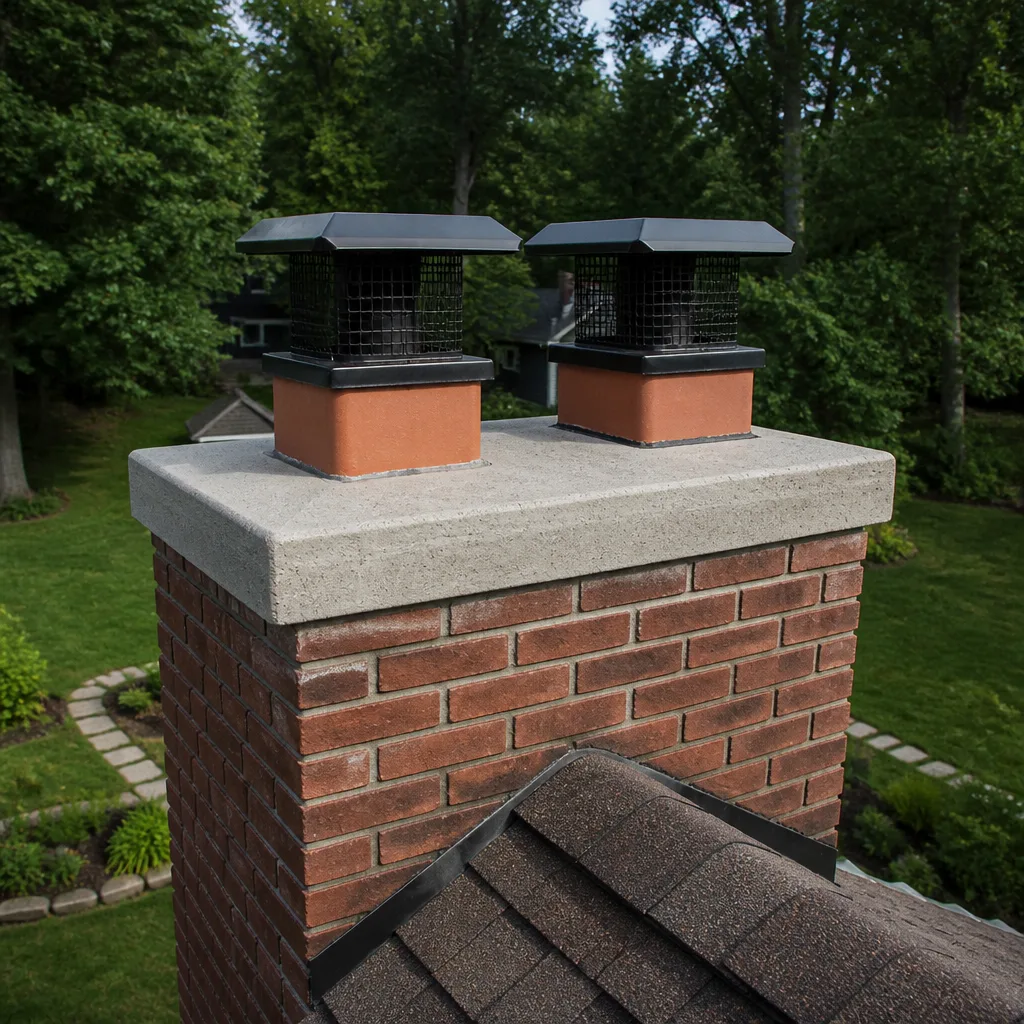
- Rust or corrosion on the cap or flashing. Water has been sitting where it shouldn’t. A failing cap lets rain and animals in; failing flashing lets water into the roof deck.
- Loose or missing mortar joints. Crumbling mortar between brick courses is a slow structural failure. Reaching the joints before they’re badly eroded saves money and prevents bigger repairs.
- Visible tilt or separation from the roofline. A chimney that leans away from the house or shows a widening gap where it meets the roof needs a professional look right away. Don’t test whether it’s safe; book an inspection.
If you see several of these together, the pattern matters more than any single mark. That’s worth mentioning when you call so we can help you book the right type of visit, whether that’s a standard sweep or a chimney inspection.
Draft Problems as a Diagnostic Tool
A fireplace that worked fine for years and suddenly smokes into the room is sending a message. Draft issues are one of the best diagnostic tools homeowners have, because they show up before structural damage becomes visible. Here’s what a draft problem usually points to.
- A partially or fully blocked flue. Creosote buildup, a bird nest, or a collapsed flue tile is narrowing the passage, and the smoke can’t get up fast enough.
- A failing damper. A damper that won’t fully open, or that warped and no longer seals, changes the airflow through the firebox and can push smoke into the room.
- A flue that’s the wrong size or height for the appliance. A flue that’s too short or too wide loses the pressure difference that drives draft. This becomes noticeable when homeowners change stoves or appliances.
- Negative pressure in the house. Bathroom fans, kitchen exhausts, and modern tight construction can pull air down the chimney instead of up it. If your fireplace smokes only when other fans are running, pressure is the likely cause.
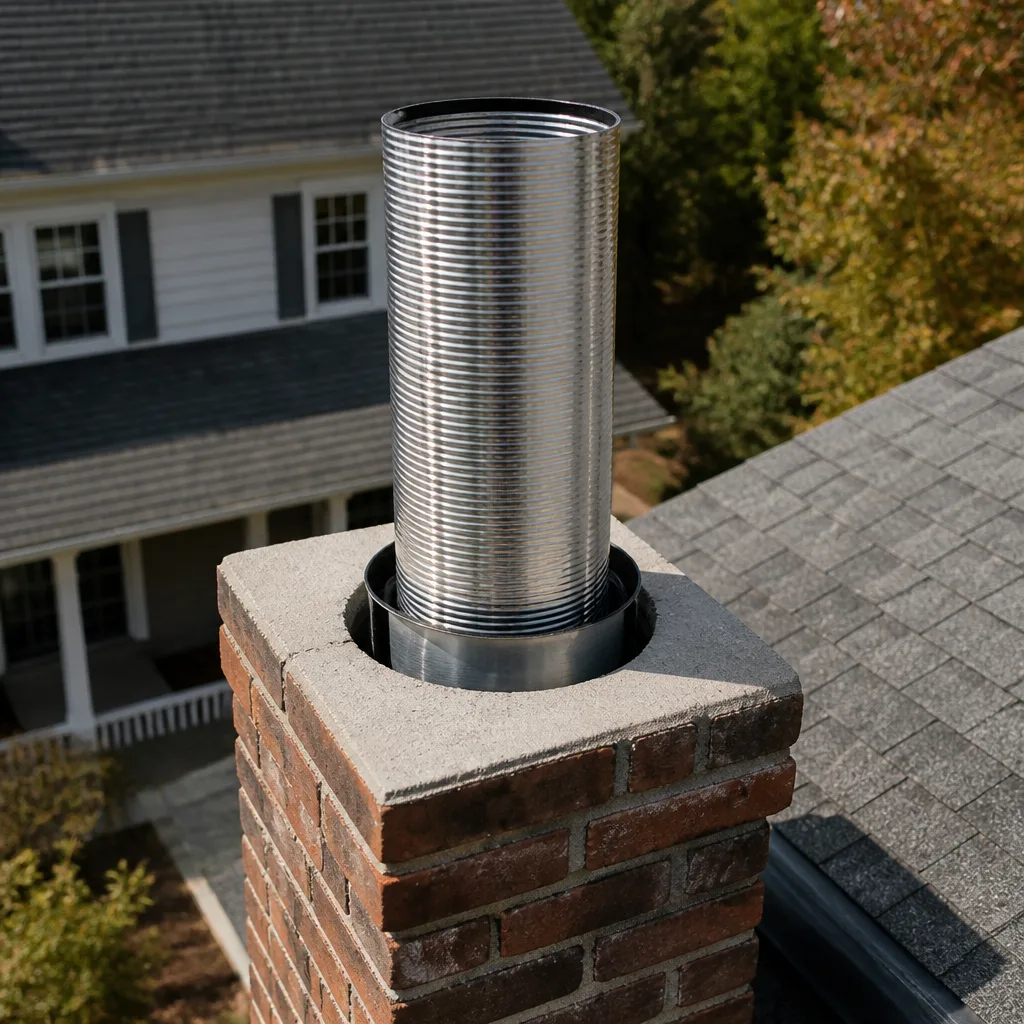
- A liner with cracks or gaps. Even small cracks in a flue liner disrupt the flue’s ability to pull smoke upward. These are the hardest to see and the most important to catch.
The realistic read: if your fireplace has suddenly started smoking and the weather hasn’t changed, assume it’s a mechanical issue in the flue system and book a professional check. Testing whether the problem is the chimney or the house’s air pressure requires a technician on site. Don’t keep running the fireplace to see if it improves; a blocked flue is a carbon monoxide risk as well as a smoke risk.
Sounds That Signal Nesting or Structural Movement
The sounds coming from a chimney are easy to ignore, and easy to misidentify. A faint scratching overhead in the spring often gets blamed on the roof or attic, when the actual source is the flue. Here’s how to tell which sounds matter.
- Scratching, skittering, or rustling. Animal activity. Birds pushed into the flue usually cause a fluttery, scratching sound; squirrels and raccoons create heavier scratching and dragging noises. Any animal activity means the cap or screen has failed and needs to be repaired as well as the flue cleaned.
- Chirping or squeaking. Nests are live. Call for a professional rather than trying to remove the birds yourself; chimney work around nesting animals has health and safety considerations.
- Clunking or grinding when you open and close the damper. Likely a damaged or seized damper mechanism rather than structural movement.
- Rattling or shifting during wind events. This can be a loose flue tile or a crane-damaged cap, or it can be a masonry issue. If it started recently and continues after the wind settles, it’s worth a look.
- Faint hollow scraping during the first minutes of a fire. Metal flue liners expand slightly when heated. A consistent scraping at startup can indicate a loose liner seam that needs to be reset or remade.
Any animal sound in the flue, persistent scratching, or a new structural noise is a reason to book a professional inspection. In Paradise, spring is when we hear the most bird-related calls: the dry desert heat and open flues make an attractive cavity for nesting.
Cosmetic vs. Structural: How to Tell the Difference
Not every mark on a chimney is bad news. Telling cosmetic from structural is the difference between a routine sweep and a full repair. Here’s how to sort them, so you can describe what you’re seeing accurately when you call.
- Cosmetic signs (still worth a check, but not urgent): light efflorescence without spalling; a small stain on one face without cracking; minor mortar loss near the top of the chimney; a rusty cap without other exterior damage.
- Structural signs (call before the next burn season): spalling brick; cracks running through the masonry; a chimney leaning away from the roofline; dark stains across multiple brick courses; any sound of structural movement; a flue liner you can see cracks in through the firebox.
- Gray-zone signs (a professional call decides urgency): a single crack in a flue tile; a damper that isn’t sealing; smoke entering the room occasionally; staining that appears once and doesn’t grow.
The clean way to think about it: any mark that changes appearance, any mark that appears after a burn event, and any mark that shows up with sounds or smells needs a sweep. A pure appearance issue with no other signals can wait for the next scheduled visit. What we tell homeowners in Paradise is simple: clean once, watch carefully, and let a trained technician make the call when it’s borderline.
Why Paradise Chimneys Age Differently
Chimney problems in Paradise aren’t the same as they are in colder, wetter parts of the country. The local climate drives different wear patterns, which matters for which warning signs matter most here.
The heat and dry air of a Paradise summer lean hard on the chimney’s exterior. Thermal cycling, from cool nights to summer afternoons that push into triple digits, causes masonry to expand and contract more than in a milder climate. The practical result is a higher-than-average rate of cracks at the crown and in mortar joints, and a longer stretch of the year when the chimney is warm and idle. Warm and idle is exactly the condition that drives creosote off-gassing, which is why the creosote smell is such a common summer complaint in Paradise.
Dust is a factor too. Desert dust finds its way into every gap. Creosote mixed with dust makes a stickier residue that binds more tightly to flue walls, and animal nesting is often more conspicuous because the flue provides shelter from sun and heat. Seasonal swings also mean that the first cool evening in Paradise can tempt a homeowner to light a fire before the chimney has been checked for the year. That first burn after a long idle period is the most important one of the season, because any animal nest, creosote build-up, or loose tile is still in place. Book your sweep before the season changes, not after the first smoky evening. For more local context, see our Paradise service area page.
How a Professional Checks a Chimney in Paradise
A chimney check isn’t a single look down a flue. It’s a sequence, and knowing the sequence helps you judge what a real inspection looks like and whether you’re being told something worth trusting.
- Exterior walk-around. The technician looks at the chimney from the ground and the roofline for staining, spalling, mortar condition, cap condition, flashing, and signs of lean.
- Crown and cap check. A close look at the top of the chimney, where many water problems start. Cracks, spalling, and a failed cap are common findings here in Paradise.
- Flue and firebox inspection. Checking the flue’s interior for creosote level, cracks, blockages, and animal intrusion, and the firebox for damage.
- Appliance and damper check. Verifying that the damper opens and seals, that the appliance connections are intact, and that the draft path is clear.
- Cleaning. Once the inspection has established what’s there, the sweep is performed to remove creosote and debris from the flue and firebox.
- Report and recommendation. A technician explains what was found, in plain terms, and separates what needs attention now from what can wait, so you can decide with a clear picture.
If repair comes up, the choice of material matters more than homeowners realize. Generic patching compounds are cheap and don’t last in a hot, dry climate. We work with heat-rated systems and manufacturer-specified resurfacing products because they’re built for chimney duty, not repurposed from general construction. When a repair is on the table, ask what product is being used and why, and we’ll explain it. Our Chimney Sweep Paradise team is set up to answer that question before anything is installed.
How to Communicate Urgency When You Call
When you call for a chimney issue, the person on the phone needs enough detail to book the right visit. The homeowner who says “it smells funny” gets a routine booking; the homeowner who says “there’s a damp, musty smell near the firebox, and the brick on the east face has started to flake” gets a different call, because those details point to a specific problem.
These are the details worth having ready:
- Smell. Describe its character: sharp and tarry, musky, damp and musty, or just smoke. This single piece of information often tells a technician what to expect.
- Visible marks. Note the type (stain, white bloom, flaking, crack), the location (which side of the chimney, top or bottom), and how long you’ve noticed it.
- Draft behavior. When does the fireplace smoke? On startup, when other fans run, or continuously? Has it changed after years of working fine?
- Sounds. Describe what you’re hearing: scratching, chirping, clunking, rattling, or scraping. Note the time of day and whether it stops when the fire burns.
- Timing. The first time you noticed each sign matters. New marks or sounds in the past month tend to be more urgent than years-old ones.
- Recent history. Any recent storms, tree trimming near the chimney, appliance changes, or renovation work on the house.
If you can sort that list before calling, you’ll get a more useful conversation and a more accurate booking. We answer 24/7 for scheduling questions. Call (844) 314-6144 and describe what you’ve got; the more accurate the picture, the faster the right technician is out.
Common Mistakes to Avoid
- Waiting for a visible fire hazard before calling. The smell and the sound catch problems long before a visible hazard does. A homeowner who waits for a dramatic sign has usually let a cleaning problem become a repair problem.
- Treating every smell as “just the fireplace.” Musty and tarry and musky are three different signals, and each points to a different cause. Describe the smell in detail when you call instead of assuming the smell is harmless.
- Attempting a DIY flue inspection by looking up the firebox. You can’t see the flue from below, and you can’t see the flue tiles from the roof without proper tools or training. The more useful thing you can do is describe the signs to someone trained to read them.
- Cleaning the exterior with a pressure washer. Pressure washing drives water deeper into brick, which accelerates spalling. For Paradise’s dry air, the better route is to have the masonry checked and repaired rather than blasted with water.
- Using a generic patching compound on a cracked crown or flue. Patching compounds aren’t heat-rated for chimney service. In our experience, these fail quickly, and the wasted repair costs more than the right product would have.
- Ignoring the dryer vent while booking a chimney visit. A clogged dryer vent is one of the leading causes of residential house fires. If your dryer cycles are getting longer, that’s its own warning sign. Ask about dryer vent cleaning when you book.
- Burning a fire in a chimney that’s already showing sounds or smells. If animals have nested in the flue or a liner has cracked, burning in it increases the risk. Book a sweep before the next fire, not after.
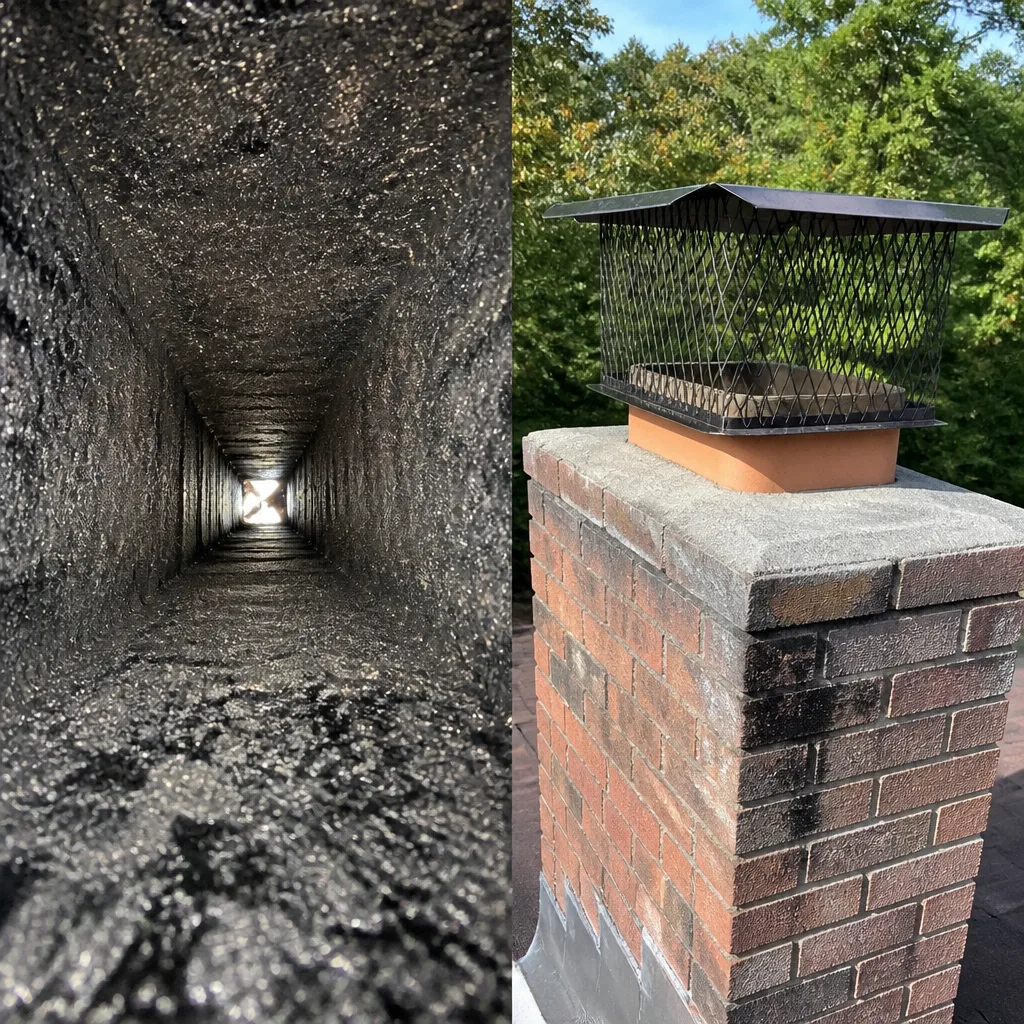
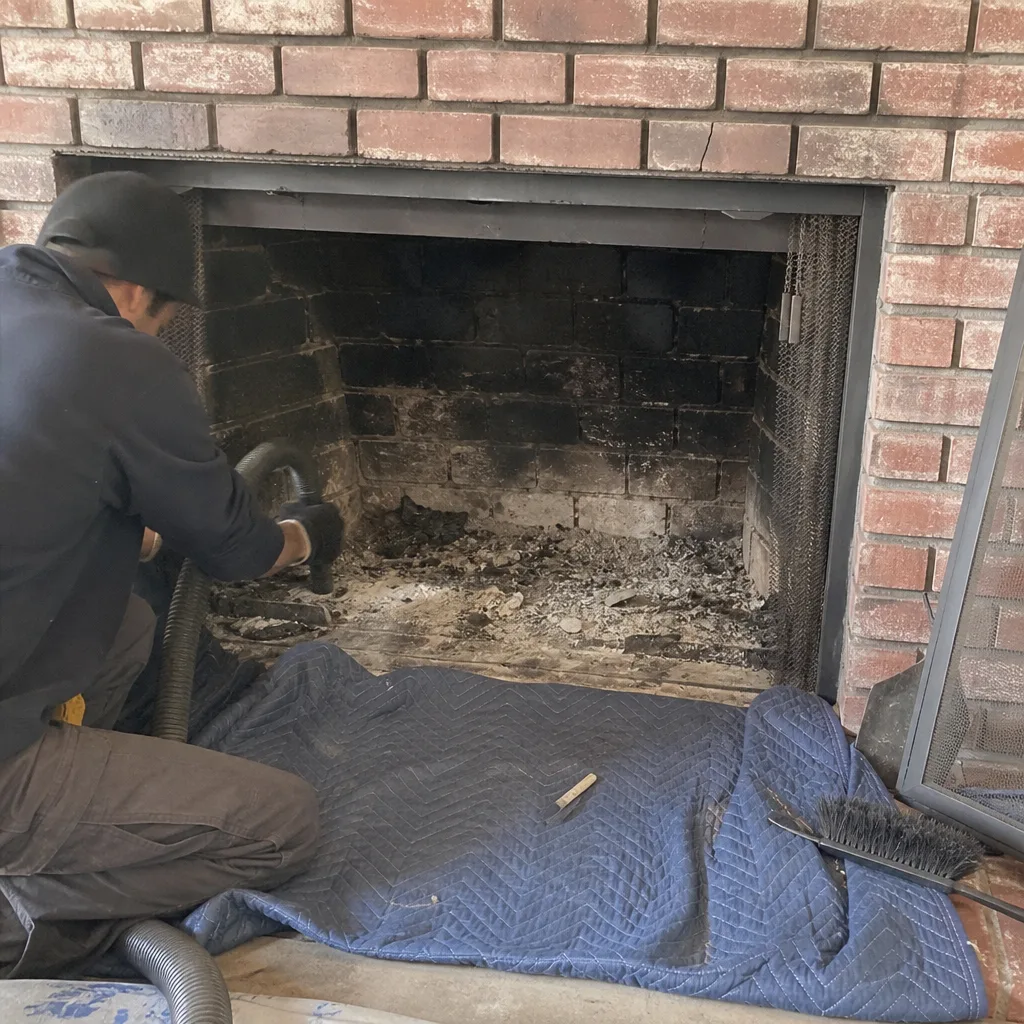
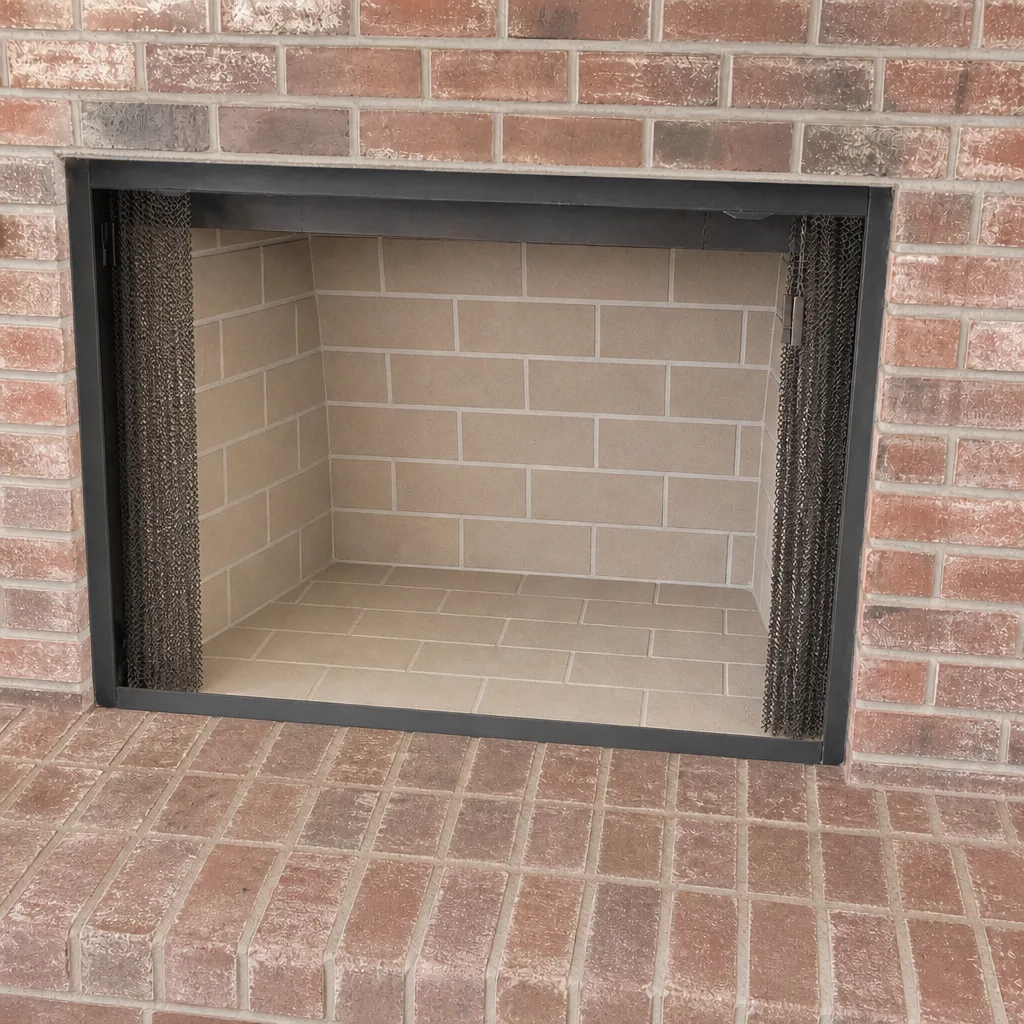
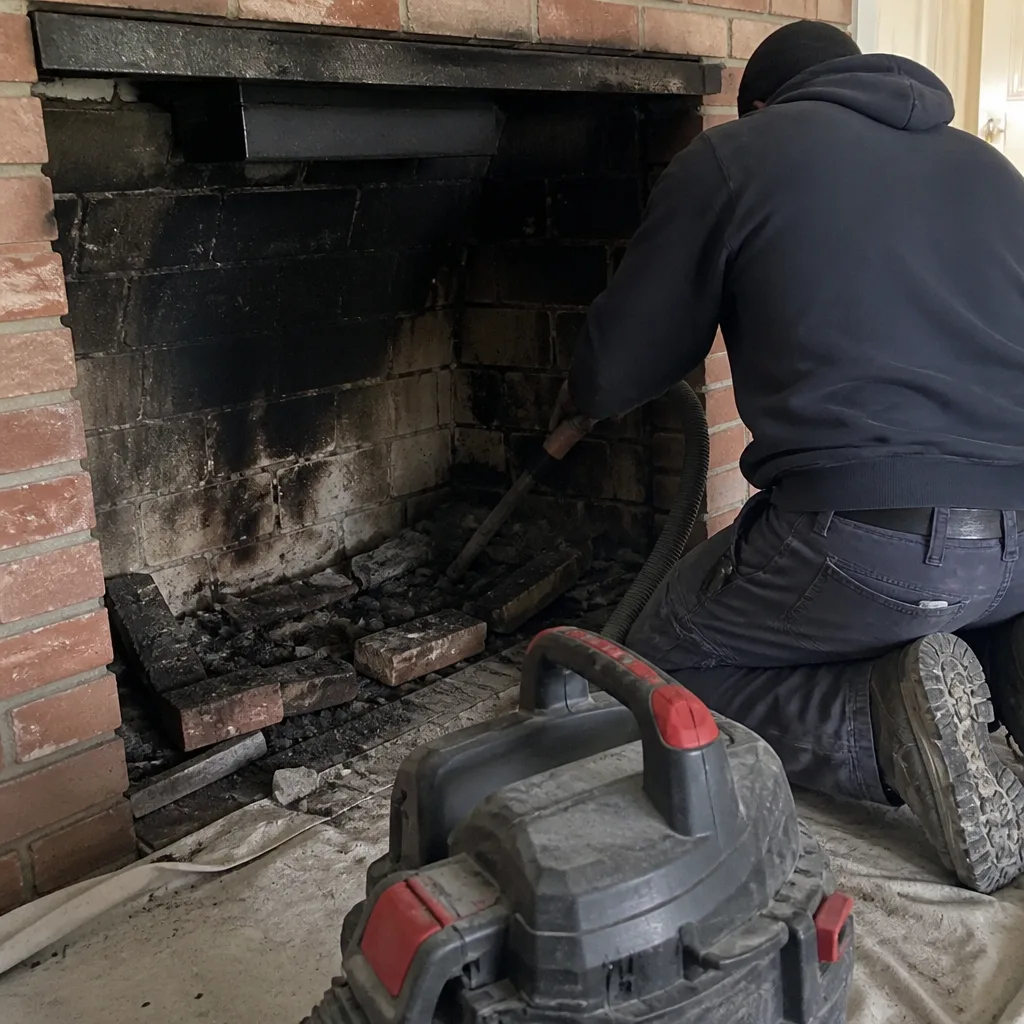
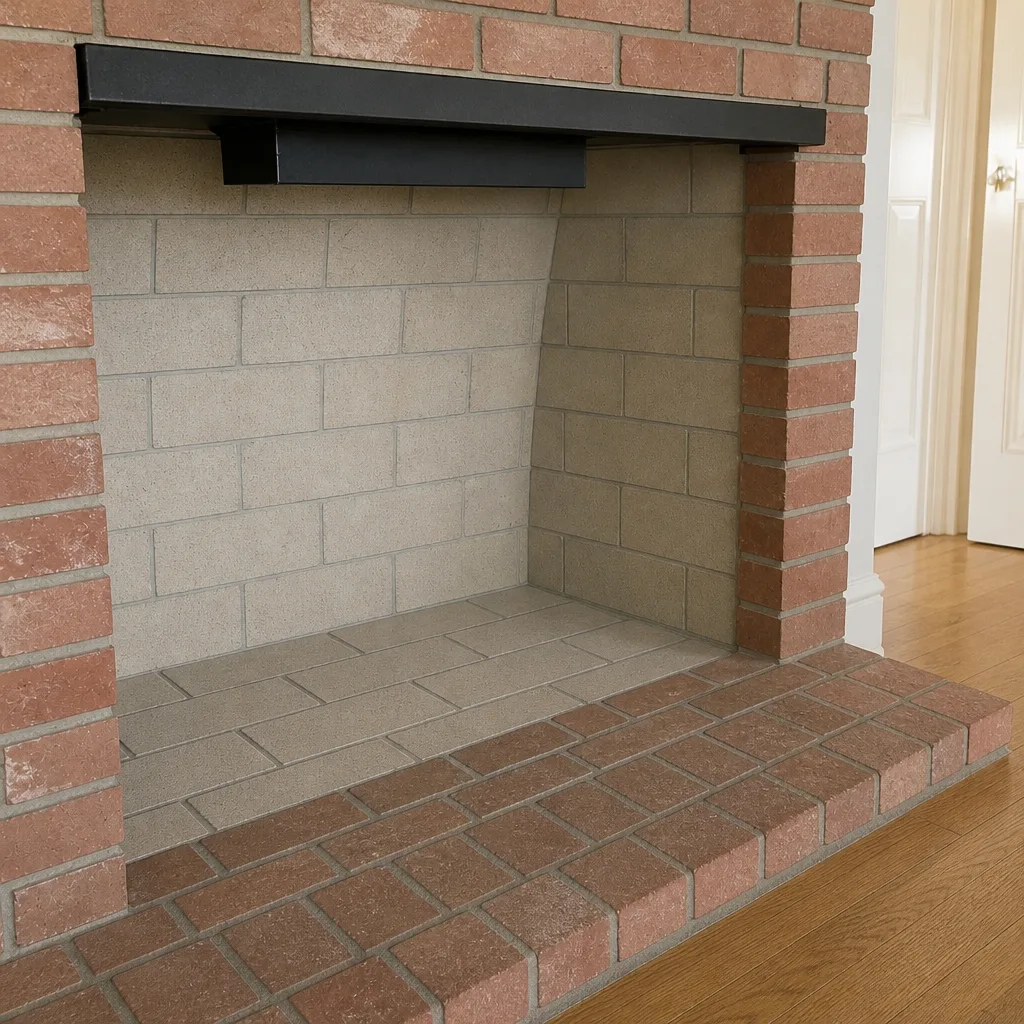
See the difference
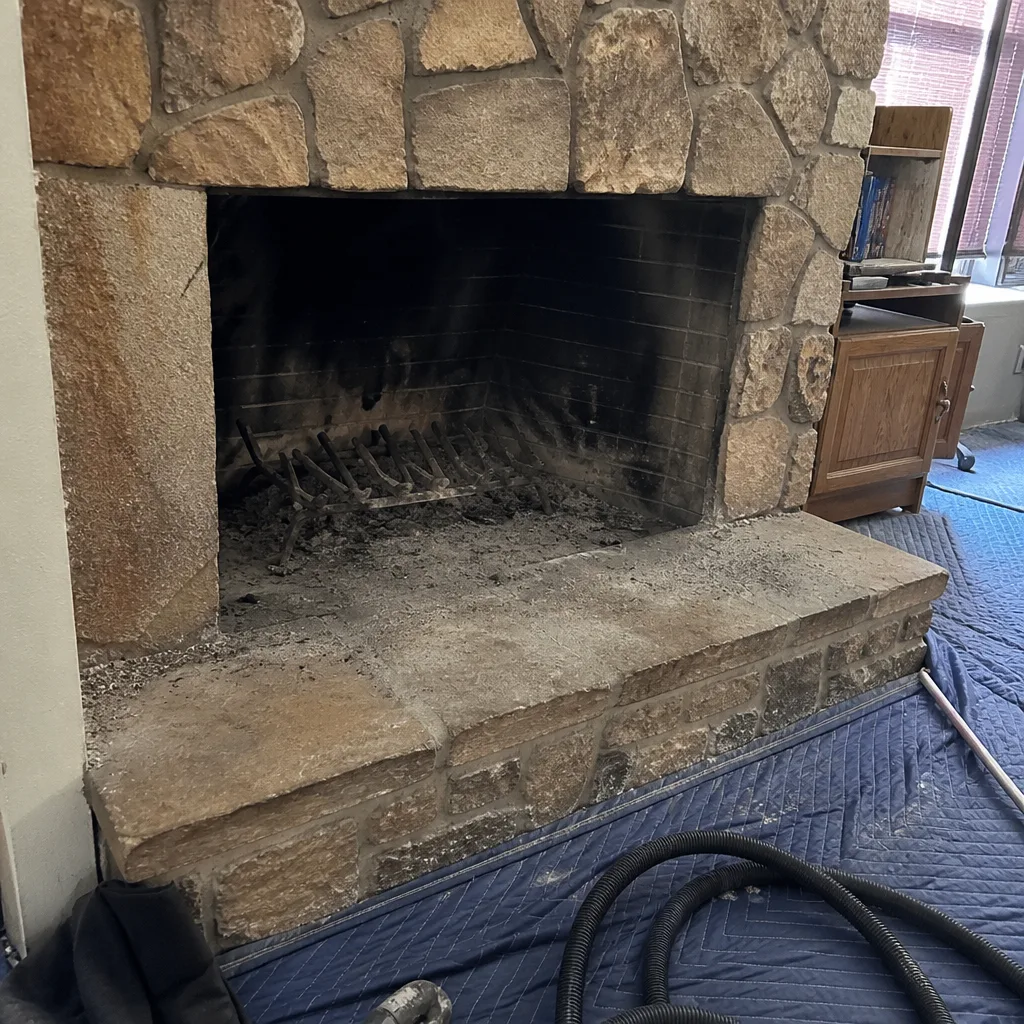 Before
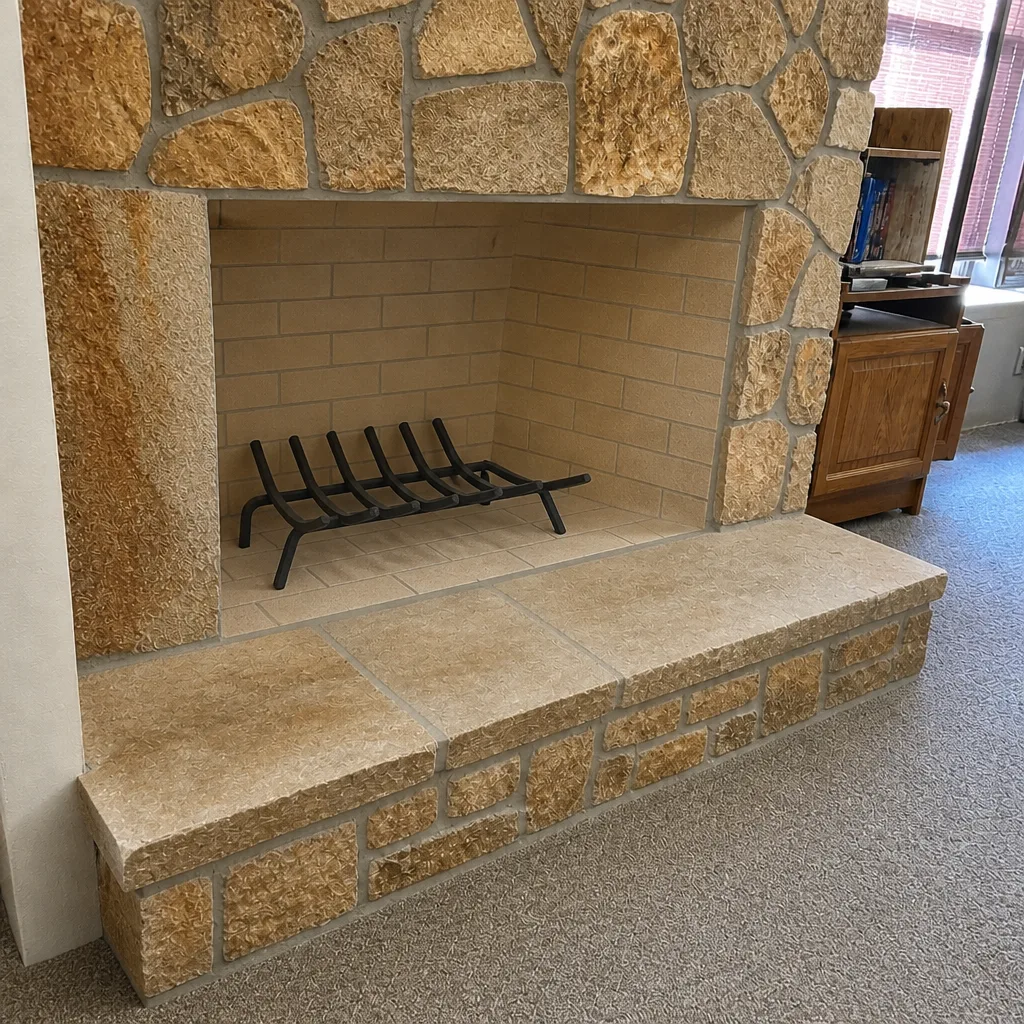 After
 Before
 After
 Before
 After
When to Call a Professional
Call a professional when any warning sign appears that you can’t explain with certainty. Specific scenarios that should trigger a call: a strong tarry or musty smell with no fire burning; a fireplace that has started smoking into the room; exterior spalling, cracking, or a widening gap at the roofline; animal sounds in the flue; a dryer that has been taking noticeably longer to dry. These signs are enough, individually and definitely in combination. Chimney Sweep Paradise offers free estimates in Paradise. Call (844) 314-6144. We answer 24/7, with fast dispatch from 7am to 7pm, Sunday through Friday. When you call, the team can help you decide whether this is a sweep, a repair, or both, before anyone visits.
Frequently Asked Questions
A sharp, tarry odor with no fire burning is the single most reliable early signal, because it means creosote has built up enough to off-gas. Creosote is the flammable residue behind most chimney fires. If you smell it during the off-season, especially in Paradise’s dry heat, book a sweep before the next fire. Call (844) 314-6144 and describe the smell; the team can tell you how quickly to book.
You can check the exterior from the ground, and you should. Look for staining, white bloom, spalling brick, loose mortar, and a leaning chimney. What you can’t check safely is the flue interior, the crown, or the cap condition, which require roof access and proper tools. Anything you see on the exterior that’s new or growing is a reason to call a professional rather than climb the roof.
Most wood-burning chimneys benefit from an annual sweep, with a check before the first fire of the season, but the correct interval depends on how much you burn and how the flue looks inside. A chimney used heavily can need a sweep twice in a year. A gas appliance usually needs less frequent sweeping but still needs an annual check. In Paradise, the dust and heat make the case for a pre-season inspection rather than waiting for a problem. Call (844) 314-6144 for a free estimate.
A weak smoky smell on a hot day can be creosote off-gassing, but a strong, tarry smell is a real signal that creosote has built up. If you also notice exterior staining or the smell gets worse each summer, book a sweep. The distinction matters: heat alone shouldn’t produce a strong chimney smell in a well-maintained flue.
For a small hairline crack in the firebox or crown, a manufacturer-specified chimney product can be used, but generic patching compound is not appropriate and will fail. The larger issue is determining whether the crack is cosmetic or structural, which requires a professional eye. If you’re unsure, have it looked at before patching, because the wrong product on a structural crack can mask a bigger problem.
A sweep cleans the flue and firebox. An inspection evaluates the full system, including the flue, crown, cap, flashing, and masonry, to identify what needs repair. A good visit includes both: the inspection tells the technician what to clean, and the cleaning allows a better look inside. If you’re booking a first visit in Paradise, ask for the inspection and sweep together. We offer free estimates.
The Bottom Line
The warning signs that matter most are the quiet ones: the smell of creosote on a hot day, the white bloom spreading across a brick face, the fireplace that suddenly smokes into the room, and the scratching sound that stops when you hold your breath. Catching them early is the difference between a sweep and a repair, and in Paradise, the desert climate adds its own patterns: cracked crowns, spalling mortar, and a warm, idle chimney through the summer. Check the exterior from the ground, describe what you see accurately, and book a professional check before the season turns. Book with Chimney Sweep Paradise; we answer 24/7 and dispatch from 7am to 7pm, Sunday through Friday.
If you’ve read this far and recognized your own chimney in one of the warning signs, that’s your cue to call. Chimney Sweep Paradise can help you sort cosmetic issues from structural ones, in plain terms, with a free estimate. Call (844) 314-6144. We answer 24/7. Fast dispatch from 7am to 7pm, Sunday through Friday, closed Saturday.
Written by the team at Chimney Sweep Paradise.